
By DC Engineers | Architecture, Engineering & Construction
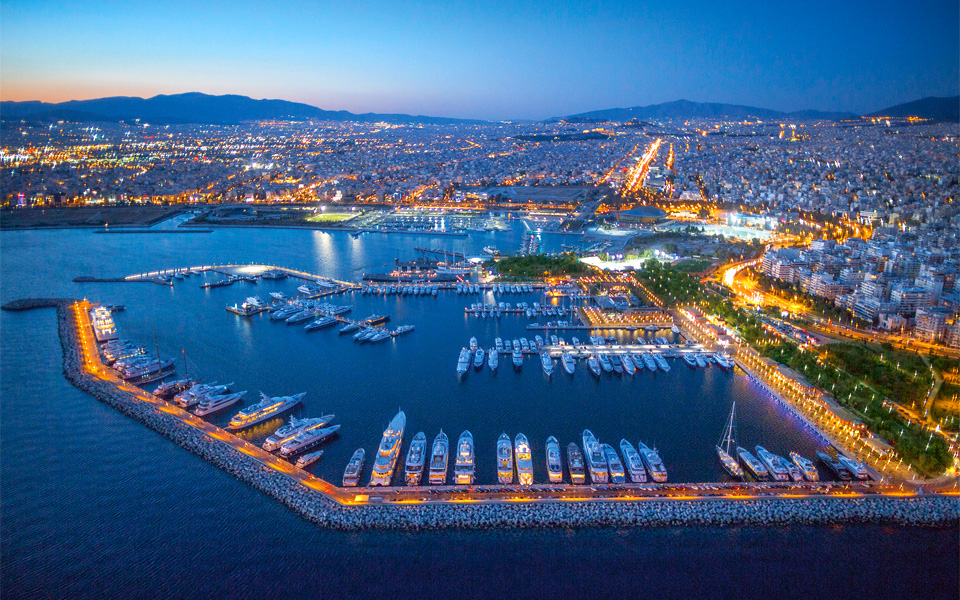
The strip of coastline running south-west from Athens through Glyfada, Vouliagmeni, and Varkiza — known collectively as the Athens Riviera — has become one of the most discussed residential development corridors in southern Europe. Land values have risen sharply. New projects of substantial scale and ambition are under way. Foreign buyer interest has intensified. And the Elliniko development — occupying the site of the former Athens international airport on the coast at Hellinikon — promises to reshape this entire stretch of coastline over the coming decade.
For foreign buyers and investors considering residential construction or development in this market, the opportunity is genuine. So are the constraints.
The Market Context
Property values in the southern suburbs of Athens — running from Alimos and Glyfada down through Voula and Vouliagmeni — have risen between 20% and 30% since 2019 in many locations, with the upper end of that range applying to sea-view sites and premium addresses. These are among the sharpest appreciation rates in the Greek market. The southern coastal belt of Attica now ranks among Europe's more expensive coastal residential markets, though still at a significant discount to comparable Mediterranean destinations in France or Italy.
Demand is driven by a combination of domestic buyers seeking quality coastal housing, international buyers for whom the Athens Riviera offers Mediterranean lifestyle with direct air connectivity, and investors attracted by the rental income potential of the strong tourism season in this zone. Athens International Airport, which recorded nearly 4 million passenger arrivals in the first two months of 2026 alone — up 10.8% year-on-year — continues to expand, with a Program of investment targeting 40 million passengers annually by 2032.
The Elliniko project will, when complete, add a substantial inventory of new mixed-use development to the coastline, with significant public realm investment and infrastructure improvement. Its effect on surrounding property values is already being priced into the market.
Planning and Permitting in the Coastal Zone
The Athens Riviera sits within a planning framework that is considerably more complex than standard urban residential development. Several regulatory layers interact:
Coastal zone restrictions. Greek law establishes a protected zone adjacent to the shoreline — the Αιγιαλός and the Παραλία — within which development is heavily restricted. The precise boundaries and the nature of the restrictions vary depending on the specific location and the applicable regional spatial plan. Any development in proximity to the coast requires a thorough assessment of these constraints before any architectural or engineering work is commissioned.
Archaeological considerations. The Attica coastline has significant archaeological sensitivity. Development in affected zones may require preliminary archaeological investigation, and the possibility of discovery during excavation — triggering a mandatory halt and assessment by the Central Archaeological Council — must be factored into project programmes.
Urban planning designations. The permitted uses, building densities, setback requirements, and floor area ratios that apply to a specific plot are determined by the applicable general urban plan (ΓΠΣ) or local special plan. In the southern suburbs, these plans have been subject to revision and in some areas remain in transition. Establishing the precise planning parameters applicable to a site — rather than relying on assumptions or informal representations — is an essential first step in any development feasibility assessment.
Environmental requirements. Projects of a certain scale and type require an Environmental Impact Assessment (ΜΠΕ) and formal approval from the competent environmental authority. The scope of this requirement and the timescales involved should be assessed early.
Construction Considerations
The coastal environment of the Athens Riviera imposes specific demands on construction practice. Ground conditions can vary considerably across short distances — particularly in areas with a history of reclamation or coastal modification. Structural design must account for seismic loading in accordance with the Greek Seismic Code and Eurocode 8. The combination of marine exposure and seismic design requirements shapes both the specification of structural materials and the long-term maintenance obligations of any completed building.
Where developments involve significant excavation — basement levels, underground parking, or works near the coastline — geotechnical investigation is a prerequisite for structural design, not an optional preliminary. The cost of inadequate ground investigation is invariably greater than the cost of undertaking it properly.
Construction activity on the Riviera is intense. This has implications for Program (skilled labor is in demand and lead times for specialist trades are extended), for materials procurement, and for the management of contractor relationships. Foreign clients undertaking development in this market without a professional representative in Greece — one capable of exercising technical oversight on site — are exposed to risks that are not theoretical.
What Foreign Buyers and Developers Should Know
The Athens Riviera rewards serious engagement. It is not a market that forgives superficial due diligence or rushed decision-making. For a foreign buyer or developer considering construction or substantial renovation in this zone, the following principles hold:
Establish the planning position for any specific site with precision, engaging a licensed architect to review the applicable planning instruments, before negotiating on price or committing to acquisition.
Commission geotechnical and structural investigations as early as possible. The results will directly inform both the design brief and the construction budget.
Factor Program realistically. A well-run residential project of modest scale on the Athens Riviera — from planning application to practical completion — should be programmed at a minimum of 18–24 months, and often longer where planning complexity or archaeological sensitivity applies.
Appoint professional representation in Greece that can act continuously on your behalf: reviewing designs for compliance, attending site on a regular basis, managing contractor relationships, and providing timely reporting. The distance between a foreign client and an active construction site is a project risk that professional oversight mitigates.
The quality of what is being built on the Athens Riviera is rising. The standards to which buyers and end users hold new construction are also rising. The opportunity is genuine for those who engage with it seriously.
All articles © DC Engineers — Architecture, Engineering & Construction. Reproduction without permission is not permitted