
By DC Engineers | Architecture, Engineering & Construction
The European Energy Performance of Buildings Directive — known as the EPBD, in its 2024 revision — introduces a new regulatory framework for the building stock across EU member states. Greece, along with all other member states, is required to transpose the directive into national law, with full implementation required by May 2026. The implications for property owners, particularly those with older residential buildings, are practical and increasingly urgent.
The Directive and Its Intent
The EPBD is the EU's primary legislative instrument for reducing energy consumption in buildings, which account for approximately 40% of total energy use across the bloc. The 2024 revision strengthens the requirements of earlier versions, with an explicit trajectory toward a zero-emission building stock by 2050 and a series of intermediate targets.
For existing residential buildings, the directive establishes a framework of minimum energy performance standards that member states must implement progressively. Properties that fall below defined thresholds — essentially the least energy-efficient portions of the national housing stock — will face increasing pressure to undergo substantive upgrades. The direction of travel is clear: continued inaction on energy performance becomes more costly over time, both in regulatory terms and in the practical marketability of properties.
Greece's Ministry of Environment and Energy has stated explicitly that the new rules will not be applied in a blanket or punitive manner, particularly given that more than 50% of Greek homes were built before 1980 without modern energy standards. The intent is to link compliance to financial support mechanisms — primarily the established "Save" family of subsidy programs — rather than to impose sudden obligations without recourse.
Energy Performance Certificates
The Energy Performance Certificate (EPC) is the instrument through which a building's energy performance is formally recorded and disclosed. In Greece, EPCs are required at the point of sale, at the commencement of a new rental lease, and as part of the application process for renovation subsidy programs.
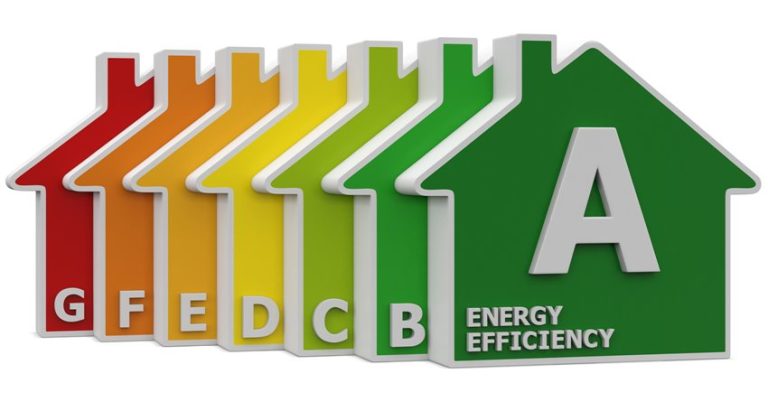
For foreign owners who purchased older properties and have not yet obtained an EPC, the certificate provides a baseline assessment of where the building currently sits on the rating scale (from A+, the highest, to H, the lowest) and identifies the interventions that would improve its rating. This is practical information, not merely a bureaucratic formality. The EPC shapes which subsidy programs a property can access, and a documented improvement in energy class — achieved through qualifying renovation works — can materially affect the property's market value and rental appeal.
What the EPBD Means in Practice
For most owners of older Greek properties in 2026, the immediate practical actions are:
Obtain an EPC if you do not have one. This requires engaging a licensed energy inspector in Greece. The inspector assesses the building's thermal envelope, heating and cooling systems, hot water provision, and glazing, and produces a certificate valid for ten years.
Understand where the property sits. The majority of older Greek buildings fall in the lower energy classes — E, F, G, or H. Properties in these classes are candidates for the subsidy programs currently available, and the new EPBD framework increases the long-term imperative to act.
Consider the available subsidy landscape. Greece's Renovate 2026 Program (Anakenizo), the existing Exoikonomo schemes, and the forthcoming Social Climate Fund resources (€2 billion allocated for 2026–2032) collectively represent substantial public support for energy upgrades. A property owner who understands these programs and plans renovation works with energy performance improvement in mind can access significant funding.
Factor energy performance into acquisition decisions. For buyers evaluating older properties in Greece, the EPC — and the estimated cost of improving the rating to an acceptable level — should inform the negotiation and the overall investment calculation. A building in energy class G purchased without accounting for upgrade costs is a different acquisition from what it appears on the surface.
The Professional Dimension
Energy performance assessment, EPC issuance, the preparation of renovation specifications that satisfy Program requirements, the coordination of qualifying works, and the submission of grant applications all require professional involvement by parties licensed to operate in Greece. For foreign owners managing these matters from the UK, the US, or elsewhere in Europe, the role of a locally based AEC practice — with the technical knowledge to read an EPC, specify appropriate interventions, and manage the works to a documented standard — is not peripheral. It is the mechanism through which the theoretical benefits of available programs are converted into actual outcomes.
All articles © DC Engineers — Architecture, Engineering & Construction. Reproduction without permission is not permitted